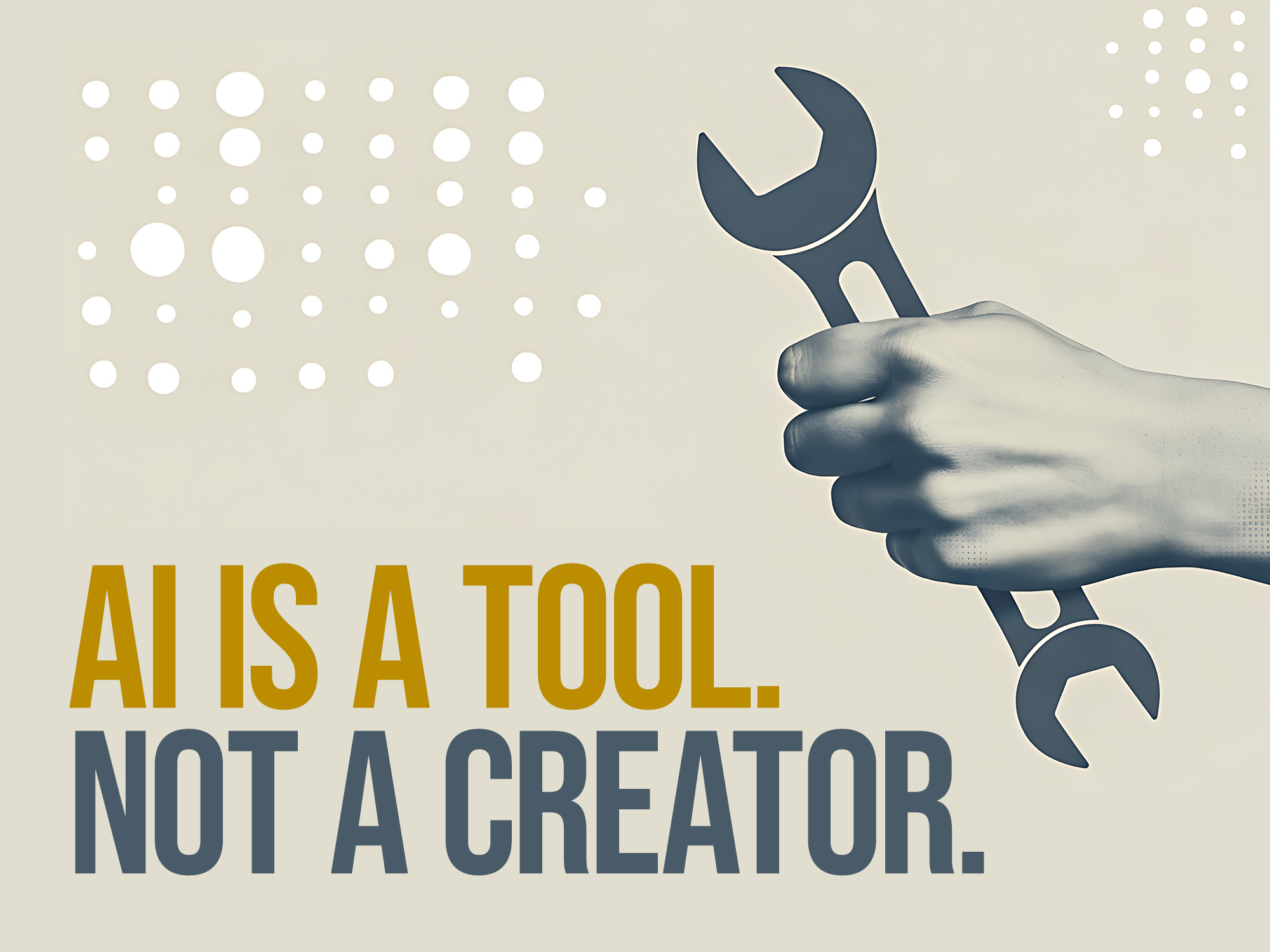
AI is a tool. Not a creator.

For a while, the question about AI in marketing was ‘should we be using it?’ – now we’re being asked ‘what are you using it for?’
At Wisetiger we use AI for many, many things ranging from exploring ideas, gathering analytics, and speeding up many of the technical aspects of building and maintaining websites. AI is a genuinely useful tool and improves productivity. But what I’ve come to believe is that how you use it matters far more than whether you’re using it at all. Because for all the upsides, there are some downsides too.
When everyone sounds the same.
With my creative director’s hat on, I’d say that as more brands reach for the same tools, more brands are starting to look and sound the same. The same clean layouts. The same smooth copy. The same generated imagery that feels vaguely familiar and yet entirely forgettable.
And it’s not just me thinking it either. Recent academic research into AI and creativity found that when people create with AI, their work tends to drift towards the centre ground – flattening the differences that would otherwise set one brand apart from another. Which is exactly the problem: when everyone uses the same tools, everyone sounds the same.
Why AI pulls to the centre.
To understand why this happens, it helps to understand what AI tools actually do. They learn from what already exists, and they work by delivering the most probable version of whatever you ask for. They can’t help but head for the centre ground.
Ask ten agencies to use AI to generate ‘an upmarket brand for a Thai restaurant’ and you’ll get ten versions of the same thing, because the tools are answering the same question in the same way every time. Ask those same ten agencies to create a brand without using AI, and you’ll get ten very different results.
That’s what AI does. It repeats back to you what it already knows. It has no point of view. It has no real-world experience. It has no emotional intelligence. Which means it has no idea what makes one brand or marketing campaign stand out from another.
Putting AI to the test.
I was reminded of all this when I read an article by an old friend, Kevin Shaw, founder of Stranger & Stranger and one of the sharpest minds in brand design. Kevin recently gave an AI engine a real brief: a label design for a wine called Defiant, where the grapes grow on impossibly rocky ground, and let it get on with it. Here’s what happened.
The machine’s first attempt was, in his words, pretty literal and pretty generic – and only in black and white, apparently because most of the wine labels in its knowledge base were black and white. Asked to add colour, it produced something moody but distinctly own-label. Asked to elevate it, it couldn’t. It churned out perfectly adequate work, taken very literally from the brief, but never got past adequate.
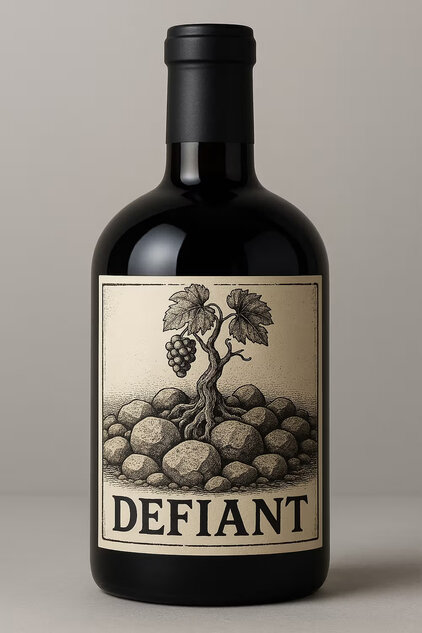
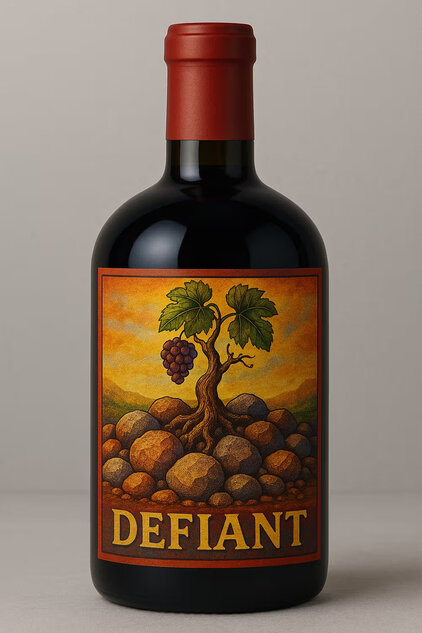
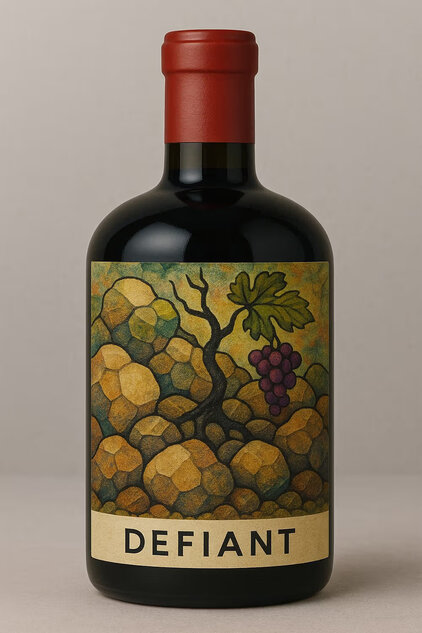
Then a human stepped in. Where the machine works from a knowledge base of things that already exist, the human went looking for the unexpected. They asked the question the machine would never think to ask: what’s going on under that rocky ground? From that single question came a whole imagined underground world – the kind of lateral, emotional, inspired leap that turns an adequate label into one worth putting on a shelf.
Here’s the end result:
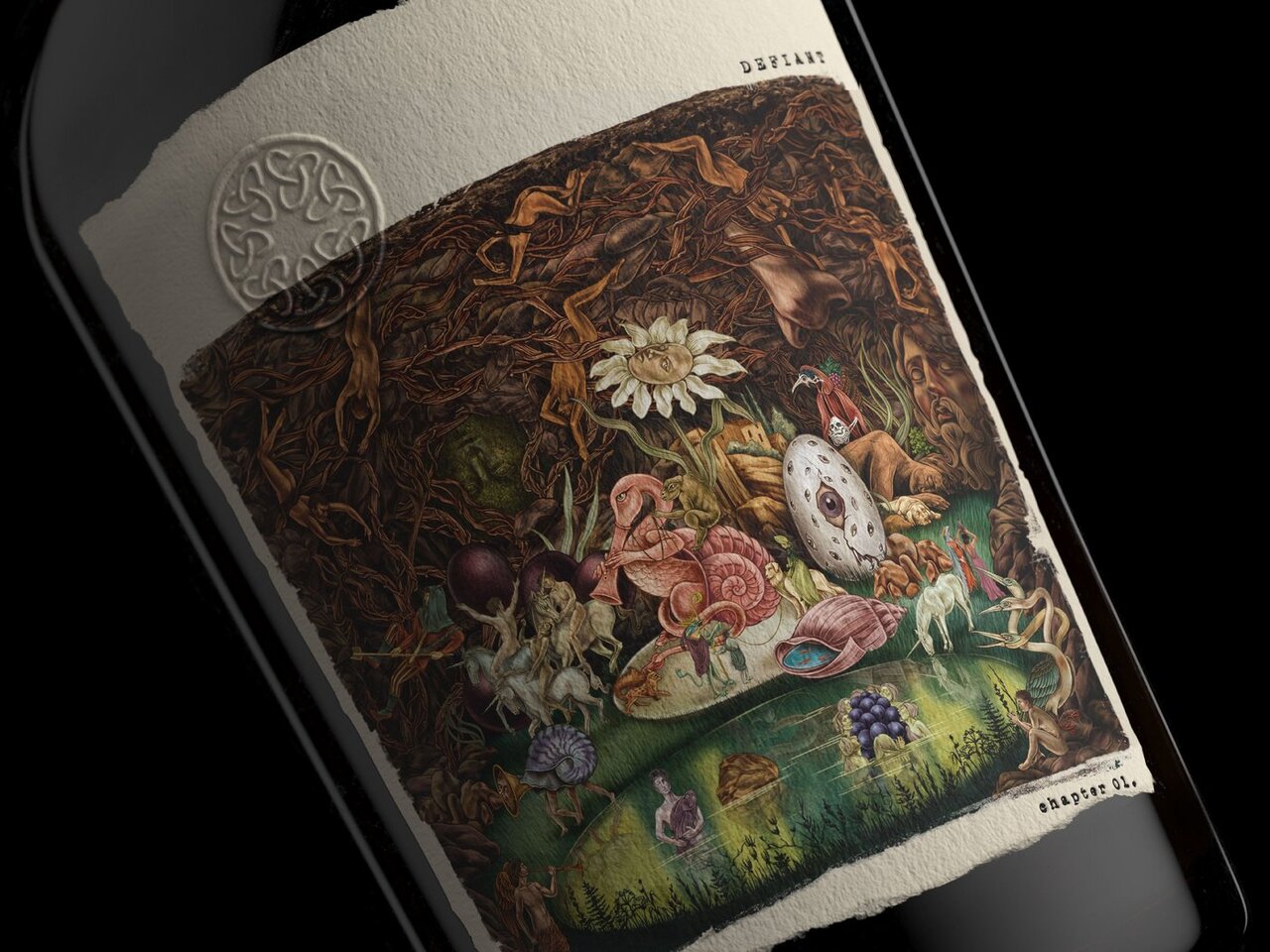
Kevin’s conclusion is the one that ought to stick. Getting the machine from ‘generic’ to ‘genuinely good’ would take forever – which rather defeats the promise of doing things faster and cheaper with AI. Whereas for a human, knowing instinctively what's working, what isn’t, and how to fix it is second nature.
There’s a commercial issue, too. As Kevin points out, you can’t own or trademark branding generated by AI in the open. So even when the tool saves you time on early visuals, you still need a human to create the version that can actually be owned. The machine can render the idea. It can’t hand you the rights to it.
A brush doesn’t paint the picture.
When it comes to AI, I’m drawn to the phrase 'A brush doesn't paint the picture’.
The creative human mind brings emotions and insight and instinct. It knows what to make, and why – and that’s the part that can't be automated. It’s the bit we care about most, because anyone can use AI tools, but that’s not where the advantage lies. It’ll always belong to the people who have something to say.
If you have any questions for Simon, please get in touch.