Wisewords. October 2026.

Most marketing terms are simpler than they sound, but the ideas behind them are worth knowing.
Every month a few marketing terms keep coming up in our conversations with clients; here’s what we’ve been talking about recently.
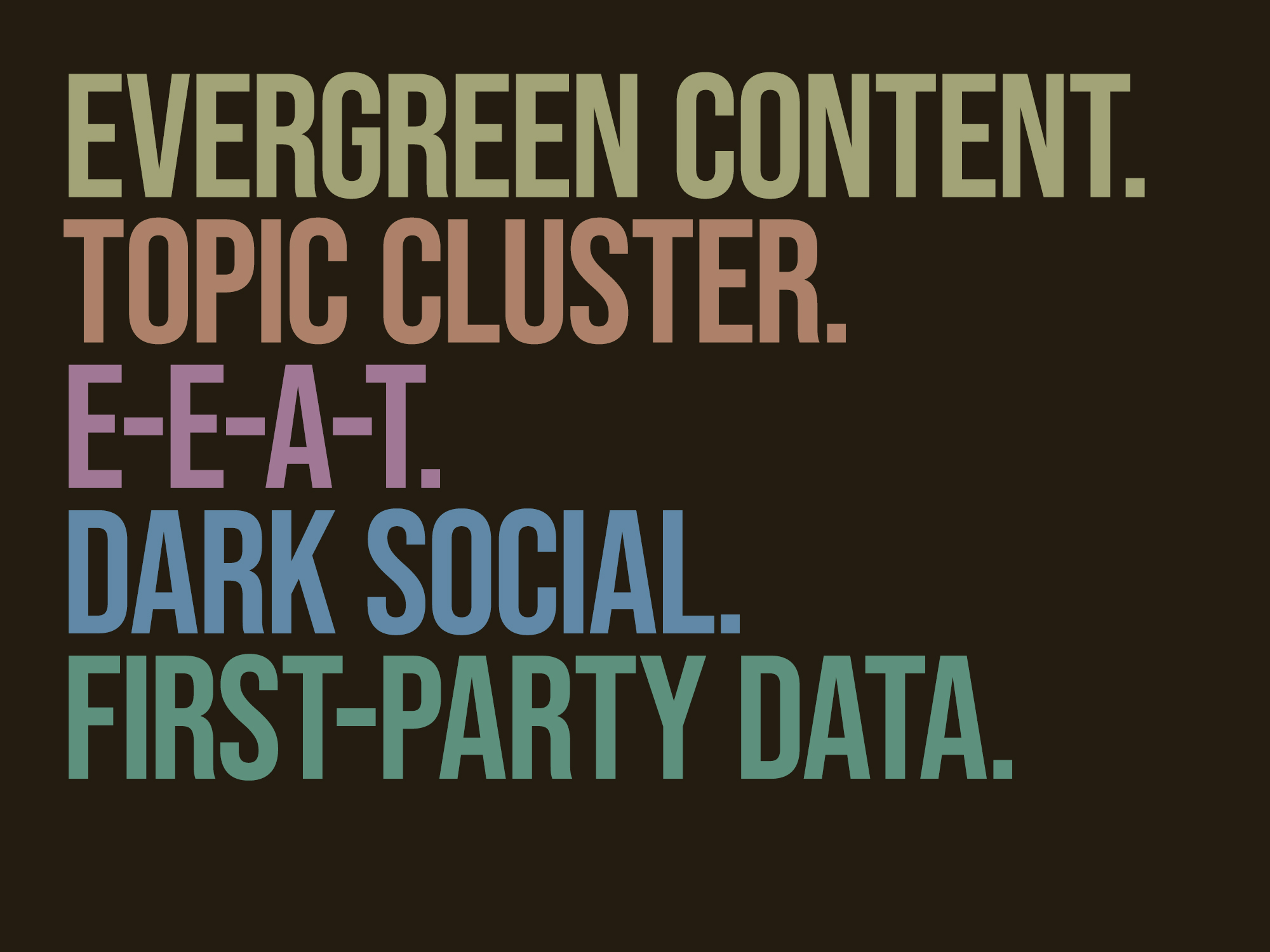
Evergreen content
Evergreen content is anything that stays useful long after the day it was published – a how-to guide, an explainer or a page that answers the questions customers always ask. News and trend pieces get attention for a short while and then fade, but evergreen pages keep bringing in visitors month after month. They’re also the pages most likely to rank well in search and to be used by AI tools, because the answer doesn’t go out of date. The only upkeep is a review them every so often to make sure the facts and links are still right.
Topic cluster
A topic cluster is a group of pages built around one main subject. A central ‘pillar’ page covers the subject broadly, and shorter pages go into detail on each part of it, with links between them all. It helps visitors find their way around your content. It also shows search engines that you cover the subject properly rather than mentioning it once.
E-E-A-T
E-E-A-T stands for experience, expertise, authoritativeness and trustworthiness. It comes from the guidelines Google gives the people who check the quality of its search results, and it describes the kind of content Google wants to show. In practice, that means named authors with real backgrounds, examples drawn from first-hand experience, genuine reviews and clear contact details. Google says trust is the most important of the four, and the other three all help to build it.
Dark social
Dark social is the sharing that happens in private – links that people click on it WhatsApp, text messages, email, Slack and direct messages. These visits come without any information about where they came from, so they usually show up as ‘direct’ traffic in your analytics. That means a lot of real word-of-mouth goes unseen. You can’t measure everything, but tagged links, easy share buttons and a simple ‘How did you hear about us?’ question on your forms will show you much more of it.
First-party data
First-party data is the information customers give you directly. It includes sign-ups, purchases, preferences, and how people use your website and emails. Browsers and privacy rules now limit how much tracking data you can get from elsewhere, so the information you collect yourself has become more valuable. It’s accurate, it belongs to you, and people have chosen to share it. Kept in a good CRM, it lets you send the right message to the right person at the right time, which is where marketing starts to feel personal rather than generic.
If any of this has got you thinking about your own marketing, we’d be glad to talk. Whether it’s a new project or making the most of what you already have, please get in touch – we’d love to hear what you’re working on.